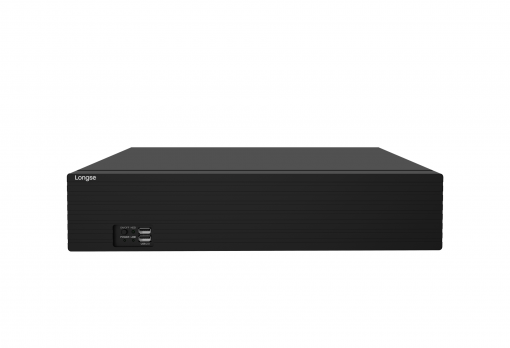
NVR3664L
64CH 4K Network Video Recorder
- • Input: Max. 64CH;
- • support (two-way) Audio;
- • HD Output:4K(3840x2160)/30Hz
- • Video Compression : H265/H264/H265+/H264+
- • Support a variety of Language UI
In the digital age, the way students approach education has fundamentally shifted. Among the most controversial tools in a Russian student’s arsenal is the (Ready-Made Homework Answers), specifically those tailored to the widely used Prosveshcheniye Russian language manuals. While these resources are often dismissed as simple "cheating sheets," their role in the learning process is more nuanced than it appears.
In conclusion, GDZ for Prosveshcheniye manuals is neither inherently good nor evil; it is a tool whose value depends entirely on the intent of the user. If used as a reference for self-correction, it supports the mastery of the Russian language. However, if used as a replacement for independent thought, it undermines the very foundation of education. The challenge for today's students is to find the discipline to use these resources as a map, rather than a vehicle. AI responses may include mistakes. Learn more gdz po posobiiu po russkomu iazyku prosveshchnie
On the other hand, the over-reliance on GDZ poses a significant threat to cognitive development. The primary goal of homework in the Russian language is to develop linguistic intuition and analytical skills. When a student simply copies a text from a website, the brain remains passive. This "mechanical" completion of tasks leads to a false sense of security; students may achieve high marks on their homework but fail miserably during "Kontrolnaya" (in-class exams) or the Unified State Exam (EGE), where no digital crutch is available. In the digital age, the way students approach